Turnkey Projects
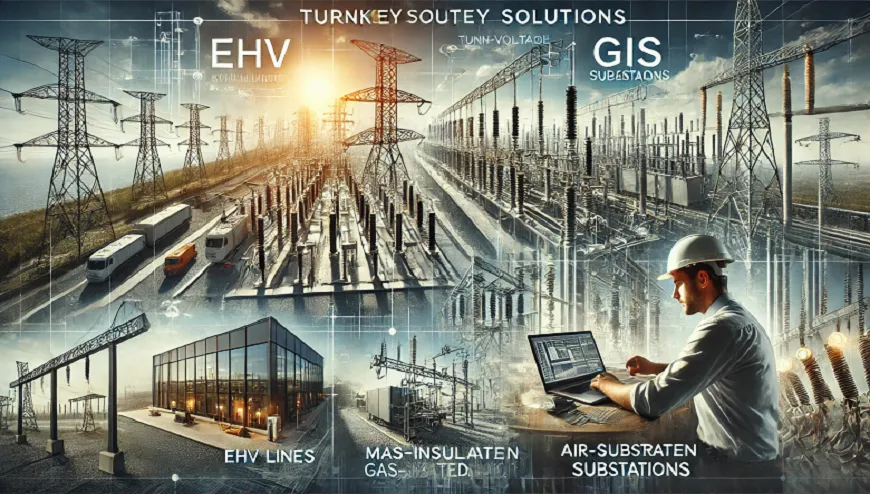
Turnkey Projects for EHV Lines and AIS/GIS Substations
Turnkey projects in the electrical engineering sector involve delivering complete solutions for high-voltage electrical infrastructure such as Extra High Voltage (EHV) lines and substations. These projects encompass the design, engineering, procurement, construction, and commissioning of fully operational systems, ensuring seamless integration into the power grid. Here’s a detailed overview:
Key Components of Turnkey Solutions
-
EHV Lines
- Construction of Extra High Voltage transmission lines, which are essential for the efficient transfer of electricity over long distances.
- Includes designing towers, selecting appropriate conductors, and managing electrical load considerations.
- Adheres to international standards for safety, efficiency, and reliability.
-
AIS (Air Insulated Substations)
- Traditional substations that use air as the primary insulating medium.
- Cost-effective solutions for areas with sufficient land availability.
- Simplified maintenance due to the accessible design of switchgear and components.
-
GIS (Gas Insulated Substations)
- Compact substations that use sulfur hexafluoride (SF6) gas for insulation.
- Suitable for urban or space-constrained environments.
- Higher reliability and lower maintenance requirements compared to AIS.
-
Switching Stations
- Facilities that regulate the flow of electricity and serve as critical nodes in the grid.
- Designed to protect infrastructure, isolate faults, and ensure a stable supply of power.
Scope of Turnkey Services
-
Design and Engineering
- Comprehensive planning and layout designs using advanced tools like CAD and simulation software.
- Load flow studies, short-circuit calculations, and stability analyses to ensure robust designs.
-
Procurement and Material Supply
- Sourcing high-quality materials, including transformers, switchgear, conductors, and insulators.
- Ensures compliance with local and international regulations.
-
Construction and Installation
- Site preparation, civil works, and erection of structures for substations and transmission lines.
- Installation of electrical components, including transformers, circuit breakers, and busbars.
-
Testing and Commissioning
- Rigorous testing of all components to verify functionality and adherence to performance standards.
- Commissioning ensures that the system is fully operational and integrated with the power grid.
-
Project Management
- Coordination across various stages to ensure timely delivery and adherence to budgets.
- Risk management and quality control throughout the lifecycle of the project.
Benefits of Turnkey Projects
-
Seamless Execution
- A single point of contact reduces complexities and streamlines communication.
- Eliminates the need for clients to manage multiple contractors or vendors.
-
Cost and Time Efficiency
- Fixed timelines and budgets help clients avoid unexpected costs or delays.
- Predefined schedules ensure quicker project completion.
-
Customized Solutions
- Tailored to specific geographical, technical, and operational requirements.
- Flexibility in design and technology selection, such as choosing between AIS and GIS substations.
-
Enhanced Reliability and Safety
- Use of state-of-the-art technologies ensures robust performance and safety.
- Reduces the risk of downtime or faults in power transmission and distribution.
-
Regulatory Compliance
- Meets stringent environmental and operational standards, ensuring legal compliance.
Applications of Turnkey EHV Lines and Substations
- Urban Power Supply: Compact GIS substations for high-density areas.
- Industrial Zones: Reliable transmission lines to meet the high power demands of industries.
- Renewable Integration: Substations that connect solar or wind farms to the grid.
- Rural Electrification: EHV lines to extend power supply to remote regions.
Conclusion
Turnkey solutions for EHV lines and AIS/GIS substations offer a comprehensive, cost-effective, and efficient approach to developing critical power infrastructure. By handling all aspects of the project, these services ensure smooth execution, high-quality standards, and reliable outcomes tailored to the needs of utility companies, industrial facilities, and governments.