GIS Substations
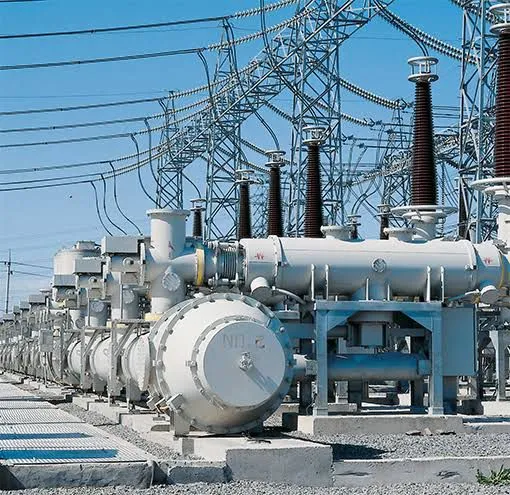
GIS Substations: Overview and Benefits
Gas Insulated Substations (GIS) represent a modern and compact technology used in electrical power systems to efficiently house substation components within a gas-insulated environment. These substations are essential in urban and industrial settings where space constraints and reliability are critical factors. Here's a brief overview:
Key Features of GIS Substations
-
Compact Design:
- GIS technology minimizes the footprint of the substation by encapsulating components in a gas-filled enclosure, making it ideal for areas with limited space.
-
Enhanced Efficiency:
- The insulation provided by sulfur hexafluoride (SF6) gas allows for higher operational efficiency and minimal maintenance compared to traditional air-insulated substations (AIS).
-
High Reliability:
- Enclosed systems are less affected by environmental conditions such as humidity, dust, and pollution, ensuring stable operation over long periods.
-
Modularity:
- Components in GIS substations are modular, allowing for easy integration of additional elements if expansion is needed.
Benefits of GIS Substations
-
Space Utilization:
- GIS substations take up significantly less space than AIS, making them suitable for urban areas or industrial zones with limited land availability.
-
Safety:
- Gas-insulated technology provides robust protection against faults, enhancing the safety of the installation and personnel.
-
Reduced Maintenance:
- With fewer exposed parts and a sealed design, GIS systems require less maintenance and have longer intervals between servicing.
-
Reliability Under Extreme Conditions:
- Ideal for challenging environments such as high-altitude or coastal regions where conventional substations may be more susceptible to external factors.
-
Environmental Benefits:
- The compact nature of GIS minimizes the environmental impact by reducing the overall land disturbance and visual footprint.
Applications
- Urban Infrastructure: Space-efficient energy solutions for cities.
- Industrial Facilities: Reliable power distribution for manufacturing plants and industrial complexes.
- Renewable Energy Integration: Effective for substations in wind and solar farms.
- Critical Facilities: Used in airports, railways, and data centers where reliability is paramount.
This capability to supply and erect GIS substations demonstrates the company's expertise in modern power systems, catering to industries and municipalities that demand efficiency, compactness, and reliable energy distribution.